What are Film Capacitors?
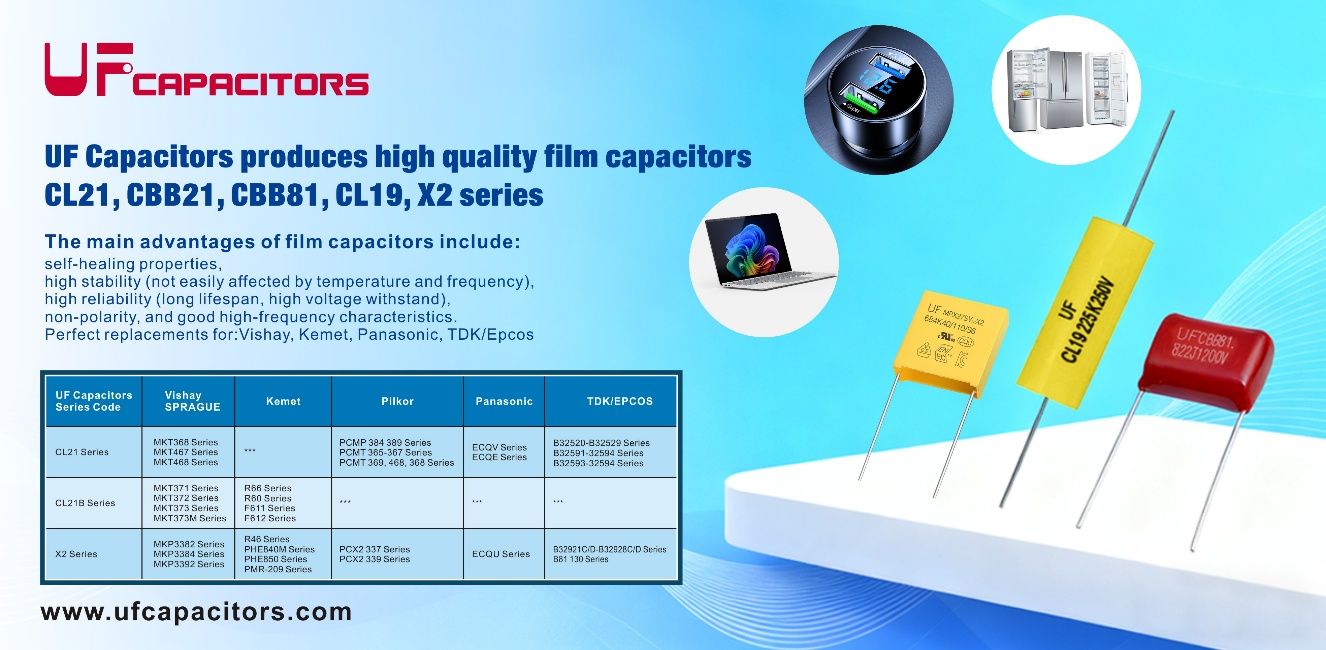
Film capacitors represent a major category within passive electronic components, characterized by using a thin plastic film as their dielectric material. As one of the most common and versatile capacitor types, they are fundamental building blocks in modern electronics. Unlike electrolytic capacitors, film capacitors are typically non-polarized, meaning they can be safely connected to an AC circuit without regard to polarity. Their construction involves layering a metallic electrode (often aluminum or zinc) with the dielectric film, which is then wound into a compact cylindrical shape or stacked into a rectangular block. This simple yet effective design yields components renowned for their stability, reliability, and excellent electrical characteristics, making them indispensable in applications ranging from simple filtering to high-power energy conversion.
Key Types of Film Capacitors
Understanding the different materials is crucial for selecting the right component:
- Polyester (PET, MKT): Known for good dielectric strength and low cost. Offers a wide capacitance range. Common in general-purpose DC applications like coupling, decoupling, and blocking.
- Polypropylene (PP, MKP): Features very low dielectric losses and high insulation resistance. Excellent for high-frequency, high-current, and precision applications like audio circuits, snubbers, and power electronics.
- Polyphenylene Sulfide (PPS): Possesses outstanding stability over a wide temperature and frequency range. Ideal for surface-mount technology (SMD) requiring high precision.
- Polyethylene Naphthalate (PEN): Similar to polyester but with better temperature performance.
- Polytetrafluoroethylene (PTFE): Used in specialized, high-temperature, and high-frequency applications due to its exceptional stability.
Core Features and Advantages
Film capacitors are prized for a combination of performance characteristics that set them apart:
- Non-Polarized Nature: Can handle AC voltages and be connected in any orientation in a circuit.
- High Reliability and Long Lifespan: With no liquid electrolyte to dry out, they exhibit minimal aging and are less prone to failure.
- Low Equivalent Series Resistance (ESR): Especially true for polypropylene types, leading to high efficiency and low self-heating.
- Low Dissipation Factor (DF): Indicates minimal energy loss as heat, crucial for high-frequency and power applications.
- Excellent Self-Healing Properties: A localized dielectric breakdown can vaporize the metal electrode around the fault, isolating it and allowing the capacitor to continue functioning.
- Stable Parameters: Capacitance value and insulation resistance remain stable over time, voltage, and temperature.
Primary Applications in Modern Electronics
The versatility of film capacitors allows them to serve critical functions across industries:
- Audio and Hi-Fi Equipment: Polypropylene capacitors are favored in crossover networks and signal paths for their low distortion and excellent sonic clarity.
- Power Electronics and SMPS: Used as DC-link capacitors in inverters, snubber capacitors to suppress voltage spikes, and for EMI filtering in switch-mode power supplies.
- Lighting: Essential components in ballasts for fluorescent lighting and drivers for LED lighting systems.
- Motor Run and Start: Specially designed AC film capacitors provide the phase shift needed to start and run single-phase AC motors in HVAC systems, appliances, and industrial machinery.
- Automotive Electronics: Increasingly used in electric vehicle (EV) powertrains, onboard chargers, and advanced driver-assistance systems (ADAS) due to their durability.
- General Signal Coupling/Decoupling: Blocking DC while allowing AC signals to pass in various consumer and communication electronics.
Selection Guide: How to Choose the Right Film Capacitor
Selecting the optimal film capacitor involves evaluating key parameters against your circuit's needs:
- Dielectric Material (Film Type): Choose PP (MKP) for high-frequency, high-power, or precision needs. Choose PET (MKT) for cost-sensitive, general-purpose DC applications.
- Capacitance Value and Tolerance: Determine the required value (typically pF to µF) and how precise it needs to be (e.g., ±5%, ±10%).
- Voltage Rating (DC and AC): The rated voltage must always exceed the maximum operating voltage in the circuit, including safety margins (often 20-50% higher). Ensure the capacitor is rated for AC voltage if used in AC applications.
- Case Size and Mounting: Consider the physical constraints (lead spacing, board height). Choose between radial lead, axial lead, or surface-mount (SMD) packages.
- Special Requirements: Consider needs like high-temperature operation (e.g., for automotive under-hood), flame-retardant casing, or compliance with specific standards.
Comparison with Other Capacitor Types
- vs. Ceramic Capacitors (MLCC): Film capacitors offer higher capacitance stability (less DC bias/voltage effect), better insulation resistance, and no microphonic issues. MLCCs are generally smaller and cheaper for low-capacitance values.
- vs. Aluminum Electrolytic Capacitors: Film capacitors have a longer lifetime, no polarity, lower ESR, and are better for AC signals. Electrolytics provide much higher capacitance per volume and are more cost-effective for high capacitance/DC filtering.
Film capacitors remain a cornerstone of electronic design due to their unique blend of reliability, electrical performance, and versatility. From ensuring the clean sound in a premium speaker to handling kilowatts of power in an industrial motor drive, their role is critical. By understanding their types, features, and key selection criteria, engineers and designers can effectively leverage these robust components to build more efficient, reliable, and high-performance electronic systems across virtually every sector. Their ongoing development continues to meet the demands of emerging technologies like renewable energy and electric mobility, securing their place in the future of electronics.