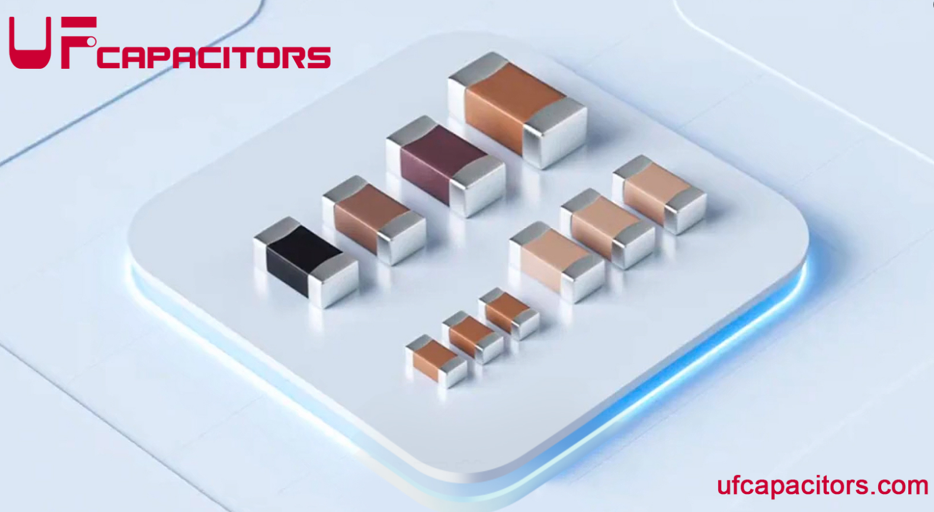
Multilayer Ceramic Capacitors (MLCC) use different dielectric materials defined by EIA RS-198 and adopted by top brands (Murata, Samsung, Yageo, Vishay). Each material differs in temperature stability, tolerance, voltage rating, aging, and capacitance drift. Choosing the right dielectric is critical for outdoor access control, power supplies, inverters, industrial controls, and consumer electronics.
1. COG / NPO (Class I, Ultra-Stable)
- Temperature range: -55°C ~ +125°C
- Capacitance drift: ±0.05% ~ ±0.3% (near zero)
- Tolerance: ±0.5%, ±1%, ±5%
- Voltage stability: Excellent, almost no capacitance drop under rated voltage
- Aging: None
- Pros: Ultra-low drift, low ESR, high frequency stability, no aging
- Cons: Small capacitance only (pF ~ low nF)
Application considerations:
Use COG/NPO for high-precision circuits (sampling, filters, oscillators, outdoor sensors). Do NOT use for large capacitance or power decoupling. Ideal for medical equipment, industrial controls, and high-end signal circuits.
2. X7R (Class II, Industrial Standard)
- Temperature range: -55°C ~ +125°C
- Capacitance drift: ±15%
- Tolerance: ±10%, ±20%
- Voltage stability: Good, slight drop at high voltage
- Aging: Low
- Pros: Balanced performance & cost, wide temperature range, industry standard
- Cons: Not for precision circuits
Application considerations:
Best choice for outdoor access control, power supplies, DC/DC converters, inverters. Works reliably in -40°C ~ +85°C industrial environments. Avoid if design requires tight capacitance stability over lifespan.
3. X7S (Class II, High-Volume Industrial)
- Temperature range: -55°C ~ +125°C
- Capacitance drift: ±22%
- Tolerance: ±10%, ±20%
- Voltage stability: Moderate, more drop than X7R
- Aging: Low
- Pros: Higher capacitance than X7R (1µF–22µF), lower cost, wide temperature
- Cons: Bigger drift than X7R
Application considerations:
Use X7S for high-value decoupling in outdoor access control, IoT, and industrial power. Do NOT use for precision nodes. Cost-effective upgrade from X5R for 125°C designs.
4. X6S (Class II, Mid-Temperature High-Cap)
- Temperature range: -55°C ~ +105°C
- Capacitance drift: ±22%
- Tolerance: ±10%, ±20%
- Voltage stability: Moderate
- Aging: Low
- Pros: Very high capacitance (up to 100µF), small size, 105°C rating
- Cons: Max 105°C (not 125°C)
Application considerations:
Perfect for AI servers, GPU power, and 85°C–105°C industrial systems. Do NOT use for outdoor -40°C to +125°C access control. Replaces tantalum capacitors in high-current modules.
5. X5R (Class II, Consumer & Industrial)
- Temperature range: -55°C ~ +85°C
- Capacitance drift: ±15%
- Tolerance: ±10%, ±20%
- Pros: Low cost, high capacitance, good for 85°C
- Cons: Max 85°C only (no 125°C)
Application considerations:
Use for indoor power, consumer electronics, battery circuits, charging modules. Not for outdoor access control or 125°C industrial equipment.
6. Y5R (Class II, Low-Cost Consumer)
- Temperature range: -30°C ~ +85°C
- Capacitance drift: ±15%
- Pros: Cheaper than X5R, basic performance
- Cons: Narrow temp range, poor cold resistance (-30°C min)
Application considerations:
Only for indoor home appliances, non-critical circuits, low-cost consumer products. Never use outdoors or in industrial devices.
7. Y5P (Class II, Economy Grade)
- Temperature range: -30°C ~ +85°C
- Capacitance drift: ±10% ~ ±20%
- Pros: Very low cost, widely available
- Cons: Obvious temperature drift, unstable at extremes
Application considerations:
For low-cost consumer products only (simple controls, toys, low-end adapters). Not for industrial, outdoor, or precision use.
8. Z5U (Class II, Low-End General)
- Temperature range: +10°C ~ +85°C
- Capacitance drift: +22% / -56% (very large)
- Pros: Ultra-low cost, high capacitance
- Cons: Poor stability, fails below +10°C, heavy aging
Application considerations:
Only for cheap adapters, non-critical bypass circuits, cost-sensitive disposable products. Not for any industrial or outdoor device.
9. Y5V (Class II, High-Cap Low-Cost)
- Temperature range: -30°C ~ +85°C
- Capacitance drift: +22% / -82% (huge drift)
- Pros: Very high capacitance (up to 100µF), low price
- Cons: Unstable, big voltage drop, severe aging
Application considerations:
Only for non-critical decoupling, low-cost consumer electronics. Never use for outdoor access control, industrial, or precision equipment.
Summary & Practical Selection Guide (Top Brands Verified)
- COG/NPO: Precision circuits, sensors, filters (no power use)
- X7R: Outdoor access control, industrial power, inverters (best balance)
- X7S: High-value decoupling (1–22µF) in industrial/IoT
- X6S: High-cap (up to 100µF) for servers, 105°C industrial
- X5R: Indoor power, consumer electronics (max 85°C)
- Y5R/Y5P/Z5U/Y5V: Low-cost indoor products only
For outdoor access control and industrial equipment, always choose X7R (main) or X7S (high cap). For precision, use COG. Avoid Y5R/Z5U/Y5V in any outdoor or high-reliability design.